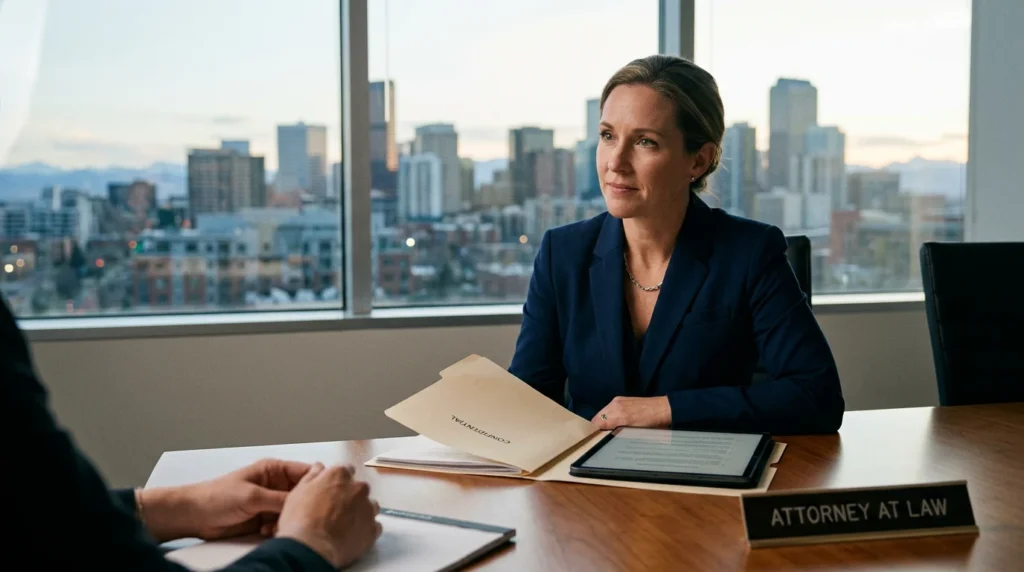
Quick answer: A rape lawyer in Denver can help you make safe, informed choices during an investigation or case—whether you’re reporting an assault or responding to an accusation. They can advise you before interviews, help preserve evidence, explain protection orders and court steps, and communicate with agencies like Denver Police or the Denver District Attorney’s Office. They can’t promise outcomes, but they can protect your rights and reduce avoidable mistakes.
What a Rape Lawyer Helps With Right Away
Quick decision guide (general):
If you’re a survivor: do ask for a victim advocate; do get medical care if you want it; do save messages/photos and write down what you remember; don’t feel pressured to give a detailed statement without support; don’t share case details widely on social media.
If you’re accused: do not contact the complainant or mutual friends to “fix it”; do preserve texts, emails, call logs, and location data; do ask for a lawyer before any interview; don’t consent to searches or hand over your phone without legal advice; don’t post about the allegation online.
The first days after a sexual assault allegation or report can move fast: phone calls from detectives, requests for interviews, questions about medical exams, and pressure to “just clear things up.” A lawyer’s job is to slow things down, protect your rights, and make sure you don’t accidentally give up legal protections while you’re stressed or in shock. If you’re looking for a rape lawyer Denver residents can speak with quickly, prioritize someone who will explain the next steps in plain language and take over communications.
In Denver, that may involve dealing with Denver Police Department investigators and, if charges are filed, the Denver District Attorney’s Office. Procedures and timelines can vary by county and agency across Colorado, so a lawyer can help you understand what’s typical where your case is actually being handled.
Survivor Support: Legal Options Beyond the Criminal Case
Criminal prosecution is only one piece of the picture, and it’s not fully in your control once a report is made. A lawyer can explain the general flow—investigation, charging decisions, court appearances, and possible testimony—without promising what a prosecutor will do in any specific case. They can also talk through privacy concerns and what information might become part of a court record.
You may also have civil-law needs alongside the criminal process. In Colorado, protection orders are commonly discussed, but the type and process depend on the situation (and sometimes the court). A lawyer can explain what a protection order can and can’t do, how “no contact” conditions differ from civil protection orders, and what documentation is helpful. For legal definitions and procedures, lawyers often reference Colorado statutes such as C.R.S. § 18-3-402 (sexual assault) and C.R.S. § 13-14-102 (civil protection orders), and the Colorado Judicial Branch’s public protection-order resources.
If You’re Accused: What a Defense Lawyer Actually Does
A rape allegation can lead to serious consequences before any trial: arrest, bond conditions, no-contact orders, and immediate impacts on housing and work. A defense lawyer’s role is to protect your constitutional rights and test the government’s evidence. That can include reviewing how statements were taken, whether searches were lawful, and whether forensic results were handled properly. They can also advocate for workable bond conditions, but no lawyer can guarantee a specific bond outcome.
Good defense work is detail work. A lawyer may look for inconsistencies across interviews, locate surveillance footage before it’s deleted, identify witnesses who can confirm timelines, and consult appropriate experts when needed. They can negotiate with prosecutors when that serves your interests, or prepare for hearings and trial when it doesn’t. Because Colorado charging practices and court procedures can differ by jurisdiction, local familiarity with the relevant court and agency practices can matter.
How to Choose the Right Lawyer and What to Ask First
Pick someone who handles serious felony cases and can explain the process step-by-step: investigation, charging decisions, first appearance, bond, motions, hearings, and trial. Ask who will handle your case day-to-day, how quickly they return calls, and what they recommend you do in the next 24–72 hours. Clear guidance matters more than big promises.
What to ask in the first call (practical checklist): Ask (1) how fees work—hourly, flat fee, or phased fees, and what typically triggers added costs; (2) who will be your main point of contact (attorney vs. associate vs. paralegal); (3) how often you should expect updates and the best way to communicate; (4) what documents to gather now (police paperwork, court notices, protection-order papers, screenshots, medical records you have, names of witnesses, timeline notes); (5) what you should stop doing immediately (contact, social media, evidence deletion); and (6) what the next procedural steps usually are in your county/court.
If you need help in Denver, DeChant Law is a place to start with a confidential conversation about your situation and next steps.